Introduction
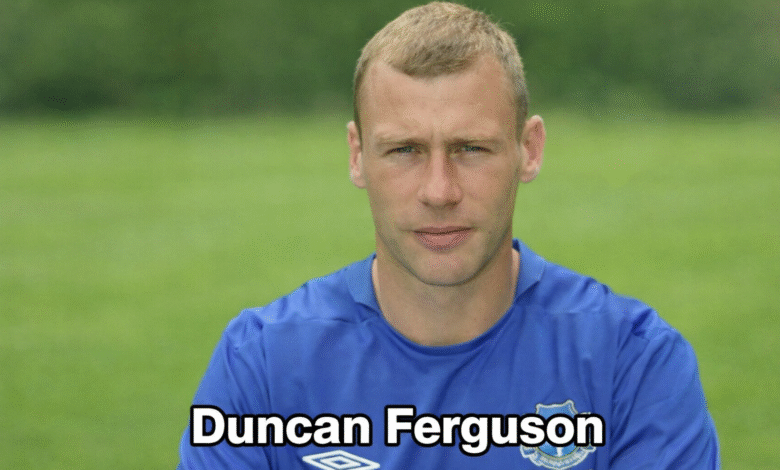
Duncan Ferguson is one of the most emotionally charged figures in British football history. Loved fiercely by supporters and criticised just as strongly by opponents, he represents a rare kind of football personality built on loyalty, intensity, and raw commitment rather than polish or diplomacy. His name still carries weight decades after his playing days ended.
Duncan Ferguson’s career tells a story of extremes. On one side stands the devoted club hero, the leader who played through pain and inspired belief. On the other stands the controversial figure whose aggression often crossed lines. This balance between admiration and criticism is exactly what makes his legacy enduring and deeply human.
Quick Bio
| Detail | Information |
|---|---|
| Full Name | Duncan Cowan Ferguson |
| Date of Birth | 27 December 1971 |
| Birthplace | Stirling, Scotland |
| Nationality | Scottish |
| Height | 6 ft 4 in (1.93 m) |
| Playing Position | Striker |
| Known For | Physical style, leadership, Everton legacy |
| Playing Career | 1990–2006 |
| Coaching Career | 2006–2024 |
Early Life and Football Roots
Duncan Ferguson was born and raised in Stirling, Scotland, where football was not simply a pastime but a central part of daily life. Growing up in a working-class environment, he developed resilience early, both physically and mentally. From local pitches to youth football, he stood out for his size, strength, and fearless attitude.
His football education began with local youth side Carse Thistle, where raw potential was evident. Unlike technically refined prodigies, Ferguson’s rise was built on effort, bravery, and dominance. These traits shaped his identity long before professional contracts or packed stadiums entered the picture.
The Start of a Professional Career
Duncan Ferguson began his senior career with Dundee United in 1990. At a young age, he quickly established himself as a striker who thrived on physical battles. His ability to unsettle defenders and score important goals made him a standout performer in Scottish football.
This strong start earned him a high-profile move to Rangers. While expectations were enormous, his time there was challenging and turbulent. It was a period that revealed both the power and the volatility of his personality, reinforcing the idea that his career would never follow a simple or predictable path.
Everton: Where Duncan Ferguson Became a Legend
Duncan Ferguson’s identity is inseparable from Everton. Joining the club in the mid-1990s, he quickly became a symbol of defiance and pride. Everton supporters saw in him a player who mirrored their values—hard work, loyalty, and refusal to surrender.
His role in Everton’s FA Cup triumph in 1995 cemented his legendary status. He was not just a striker but a leader who carried emotional weight on the pitch. Even when goals were scarce, his presence lifted teammates and electrified supporters, creating moments that statistics alone cannot explain.
Newcastle United and Return to Everton
A move to Newcastle United offered a fresh chapter, but injuries and inconsistency limited his impact. Despite flashes of brilliance, it became clear that Ferguson’s heart belonged elsewhere. His return to Everton marked a homecoming rather than a transfer.
During his second spell at the club, he evolved into a senior figure. Though injuries reduced his playing time, his influence in the dressing room grew. He embodied experience, accountability, and emotional leadership—qualities that extended beyond goals and appearances.
International Career with Scotland
Duncan Ferguson represented Scotland at international level, earning several caps. While his national career was brief and lacked goals, it still reflected recognition of his impact at club level. Competition, controversy, and circumstance limited his international role.
Despite this, his identity remained rooted in club football, where his influence was most powerful. For many supporters, his commitment to Everton mattered more than international accolades.
Style of Play: Strength and Confrontation
Duncan Ferguson was known for a style defined by physical dominance and aerial strength. Standing well over six feet tall, he thrived in direct football systems and excelled in winning headers and holding up play. Defenders often found him intimidating and exhausting to face.
However, this same intensity brought discipline issues. Red cards, suspensions, and criticism followed him throughout his career. These negative moments, while damaging at times, also reinforced the authenticity of his footballing persona—he never pretended to be something he was not.
Life After Playing: Coaching and Management
After retiring in 2006, Duncan Ferguson transitioned into coaching, primarily with Everton. Working with youth players and first-team squads, he became a mentor figure, respected for his honesty and emotional intelligence within football environments.
His later managerial roles, including interim responsibilities and senior appointments, showed a willingness to learn and adapt. While results were mixed, his leadership style remained consistent—direct, passionate, and deeply invested in player commitment and effort.
Personal Life and Character
Duncan Ferguson is known for keeping his private life away from public attention. He is married and has children, maintaining a grounded family life despite decades in professional football. This separation between public intensity and private stability adds depth to his character.
Away from football, he is often described as reflective and thoughtful, challenging the one-dimensional image created during his playing days. Those who know him closely frequently highlight loyalty and generosity as defining traits.
Legacy and Cultural Impact
Duncan Ferguson’s legacy cannot be measured solely by trophies or statistics. He represents a disappearing type of footballer—one driven by emotion, identity, and belonging. For Everton supporters, he remains a symbol of resistance during difficult periods.
At the same time, his career serves as a reminder of football’s fine line between passion and control. His story resonates because it is imperfect, intense, and real. That honesty continues to connect with fans across generations.
Conclusion
Duncan Ferguson’s journey through football is a story of power and contradiction. He inspired devotion while inviting criticism, delivered unforgettable moments while enduring setbacks. Few players leave such a strong emotional imprint on a club and its supporters.
In the end, Duncan Ferguson stands as more than a former striker or manager. He is a symbol of football’s raw core—where heart matters as much as skill, and legacy is written not just in goals, but in loyalty and belief.
Frequently Asked Questions
Who is Duncan Ferguson best known for playing for?
Duncan Ferguson is best known for his long association with Everton, where he became a cult hero and club icon.
What position did Duncan Ferguson play?
He played as a striker, specialising in physical battles and aerial strength.
Was Duncan Ferguson successful as a manager?
His managerial career had mixed results, but he earned respect for leadership, honesty, and commitment.
Why is Duncan Ferguson considered controversial?
His aggressive playing style led to disciplinary issues, which divided opinion but also defined his identity.
What is Duncan Ferguson’s legacy in football?
He is remembered as a passionate leader whose emotional connection with fans made him unforgettable.